

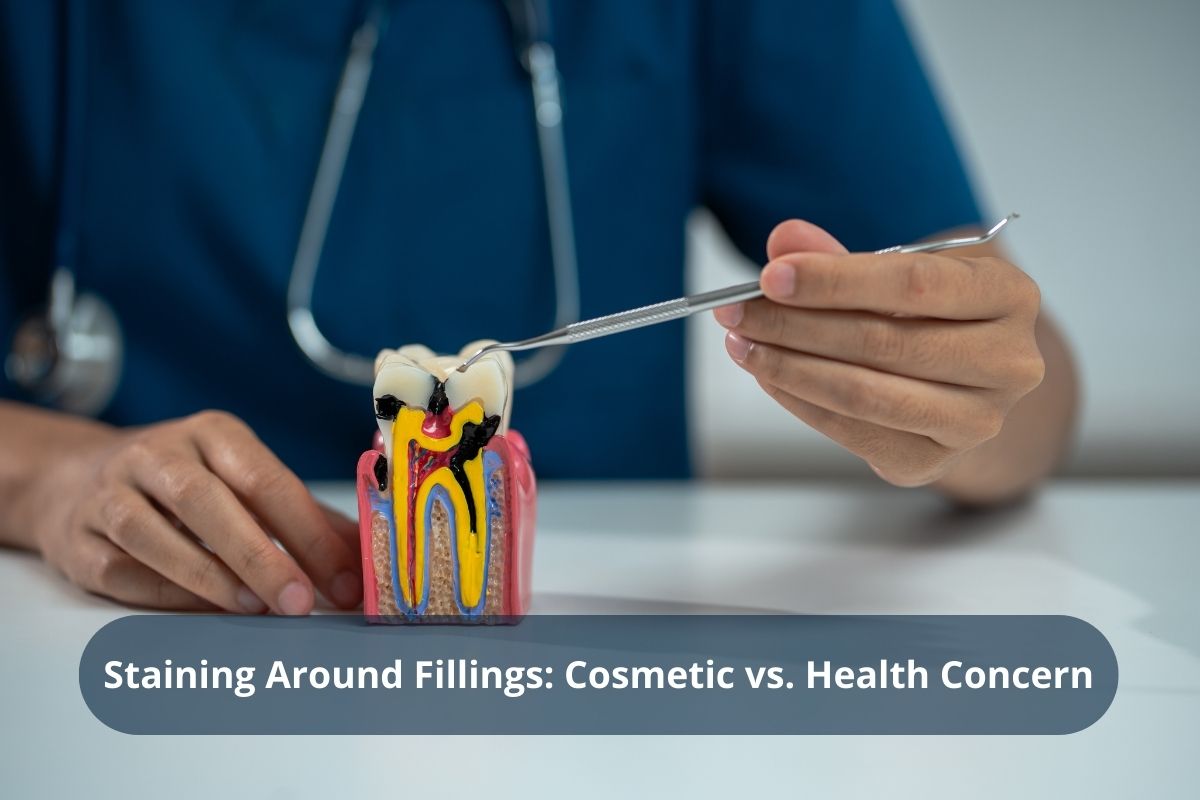
Seeing dark or discolored areas near a dental filling often leads to one important question: Does this affect appearance only, or does it signal a dental issue that needs attention? Staining around fillings is common and can develop slowly over time. While some discoloration remains harmless, other cases indicate changes beneath the filling. Understanding the difference helps protect both the tooth and the restoration.
What Causes Staining Around Dental Fillings?
Staining around fillings can occur for several reasons. Some causes affect only the tooth’s surface, while others involve the filling itself.
External (Surface-Level) Staining
Surface stains commonly develop from:
- Coffee, tea, or dark-colored drinks
- Tobacco use
- Natural changes in enamel over time
These stains usually sit on the outer tooth surface and along the edges of a filling.
Material-Related Discoloration
The type and age of a filling influence how it looks over time.
- Composite fillings may absorb pigments
- Amalgam fillings can create darker margins
- Worn filling edges can collect plaque and stains
Material-related discoloration does not always indicate decay, but it should be evaluated during a dental exam.
When Staining Around Fillings Is Mostly a Cosmetic Issue
In many cases, discoloration around fillings affects appearance only and does not harm the tooth.
Staining is often cosmetic when:
- The filling remains smooth and secure
- There is no pain or sensitivity
- The stain does not deepen or spread
- The surrounding tooth structure appears healthy
During routine exams, a dentist can assess whether staining sits on the surface or involves the filling margins. Our office, 73 Smiles, offers routine exams in the Dutchtown and Geismar area. As a dentist, we focus on evaluating existing restorations, monitoring changes over time, and identifying concerns early to support oral health.
When Staining Around Fillings Can Signal a Health Concern
Some staining patterns require closer attention because they may indicate dental problems that are not visible on the surface.
Decay Under or Around the Filling
Over time, small gaps can form where a filling meets the tooth. Bacteria can enter these spaces and cause decay beneath the restoration. Dark staining at the edges of a filling sometimes signals this process.
Failing or Worn Fillings
Fillings experience daily pressure from chewing and temperature changes. As they wear down, they may crack or loosen, allowing plaque and bacteria to collect.
Warning Signs That Should Not Be Ignored
Staining around fillings should be evaluated when it appears with:
- Sensitivity to hot or cold
- Pain while chewing
- Rough or uneven filling edges
- Visible gaps around the filling
If you are looking for a dental team in the Dutchtown and Geismar area, you can contact us to schedule an evaluation.
How Dentists Diagnose Staining Around Fillings
Identifying the cause of staining requires a thorough dental evaluation. At 73 Smiles, our dentist, Dr. Willis, uses multiple diagnostic tools, including:
- A detailed visual examination
- Dental X-rays to detect decay beneath fillings
- Magnification to assess filling margins
- Review of dental history when available
This process helps determine whether staining is cosmetic or related to underlying dental concerns.
Treatment Options Based on the Cause
Treatment recommendations depend on the source of the discoloration.
Cosmetic Solutions
When staining affects appearance only, treatment may include:
- Professional polishing during a dental cleaning
- Tooth whitening when appropriate
- Replacing a filling for improved aesthetics
Health-Focused Treatments
If staining indicates decay or a failing filling, treatment may involve:
- Removing the old filling
- Treating any decay present
- Placing a new restoration to protect the tooth
Early treatment often prevents the need for more extensive dental procedures.
Can Staining Around Fillings Be Prevented?
While some discoloration occurs naturally over time, preventive care helps reduce the risk.
Helpful steps include:
- Regular dental exams and cleanings
- Consistent brushing and flossing
- Limiting frequent exposure to staining foods and drinks
- Choosing modern filling materials when replacements are needed
Preventive dentistry supports both oral health and the longevity of dental restorations.
Keeping Your Fillings Healthy and Stain-Free
It’s common for dental fillings to develop surface stains over time. Knowing the difference between harmless cosmetic discoloration and signs of potential dental issues is key to keeping your teeth and restorations healthy. By monitoring any changes around your fillings and seeking professional care when necessary, you can protect your oral health and keep your smile looking its best.
Planning a visit? You can easily find our office on the map here.