

Why a Root Canal is Essential
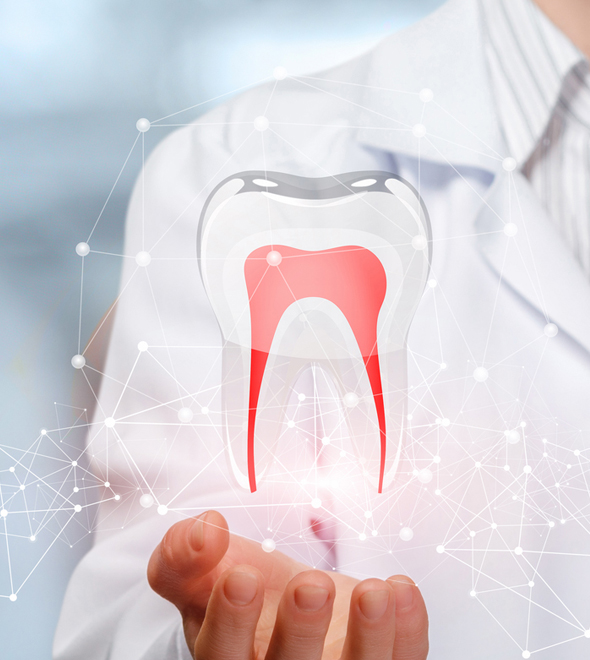
Our teeth are made up of three layers: dental enamel, dentin, and pulp. The enamel is the hard outer shell, while the dentin, a softer layer, lies beneath it. The pulp, located below the dentin, is a soft tissue containing nerves, blood vessels, and connective tissue.
Under normal conditions, the pulp is well-protected by the enamel and dentin. However, if bacteria penetrate through a deep cavity, a tooth fracture, or trauma, an infection can develop.
An infected tooth is often very painful, and if left untreated, the pain can intensify. In such cases, tooth extraction might be necessary, but it is not our preferred option.
Missing teeth can lead to various oral health problems, such as bone loss and the shifting of adjacent teeth. A root canal treatment addresses these issues by removing the infection, preserving your natural tooth, and restoring oral health. It typically involves less discomfort and a quicker recovery compared to tooth extraction.
Signs You May Need a Root Canal
Here are some warning signs that may suggest a tooth is infected or abscessed:
- Severe toothache
- Discomfort or swelling in the jaw
- Intense tooth sensitivity
- Gum bump resembling a pimple
- Puffy, red, or swollen gums
- Unpleasant taste or odor in the mouth
If you notice any of these symptoms and suspect a tooth infection, please contact our Geismar, LA dental office right away. Prompt treatment for an infected root canal is crucial for your comfort, as well as your overall health and well-being.
During a root canal, what occurs?
Many patients feel anxious about root canals, but there's no need to be afraid. This procedure is not as daunting as it may seem. Our dentists use advanced 3-D cone-beam (CBCT) imaging to meticulously plan your treatment, allowing them to view the tooth in three dimensions.
This 3-D imaging helps our dentists accurately understand the tooth's anatomy and customize the procedure to your needs. Combined with effective anesthesia, this technology ensures a more comfortable experience and better results. Most patients find significant relief right after the procedure.
We guarantee your comfort.
If you experience dental anxiety, we have the ideal solution for you. We offer oral sedation to help you stay relaxed during your procedure. To enhance your comfort, we also provide neck pillows, blankets, and TVs in our treatment rooms.
Before beginning the procedure, our dentist will apply a strong local anesthetic to numb the tooth, ensuring you feel no pain during the treatment. If you came to us in pain, you’ll likely feel immediate relief as the anesthesia takes effect.
