

Why Tooth-Colored Fillings Are the Superior Choice
Have you ever noticed dark-colored fillings in people's teeth when they smile? Maybe you have some in your own mouth. While metal fillings are functional, many prefer to avoid visible restorations. At 73 Smiles, we use tooth-colored composite resin fillings that can be matched to your natural teeth, making them nearly invisible.
In addition to being more aesthetically pleasing, resin fillings offer other benefits. They are bonded to your teeth, reducing the risk of leakage compared to metal fillings. Resin fillings also require less thickness, preserving more of your natural tooth structure.
Unlike metal fillings, resin fillings do not cause temperature sensitivity and have a similar lifespan. Additionally, resin fillings do not contain mercury, providing peace of mind for those concerned about potential health risks. Choose resin fillings for a more natural and safe option for your dental needs.
What do tooth-colored fillings consist of?
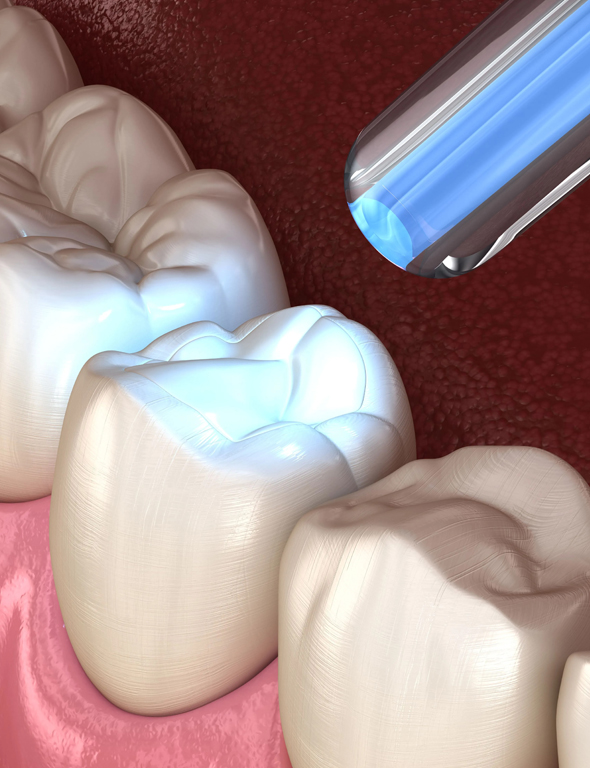
When tooth decay, cracks, or fractures affect the structure of a tooth, a dental filling can often be used to repair the damage. In the past, fillings were typically made of a metal mixture called amalgam. However, modern fillings are now commonly tooth-colored, also known as "white fillings." These fillings not only restore the form and function of the tooth but also blend seamlessly with the rest of the tooth structure. Made of strong and durable composite resin materials, tooth-colored fillings are chemically bonded to rebuild a tooth after removing any decayed or damaged structure. Initially placed as a putty-like material, tooth-colored fillings are carefully shaped to match the contours of a healthy natural tooth and then set with a light wand. In addition to repairing damage or decay, composite resins can also be used for cosmetic purposes, such as changing the size, color, or shape of teeth, and addressing imperfections or minor alignment issues like spacing.
The steps involved in filling your tooth with composite resin.
At 73 Smiles, your dentist will carefully select a shade of composite that matches your natural teeth. The next step involves identifying and removing any tooth decay. Before starting the procedure, your 73 Smiles provider will numb the area with a local anesthetic. Once the numbing agent takes effect, the decay will be removed from the cavity. The area will then be cleaned and disinfected in preparation for the filling.
To fill the cavity, a bonding solution will be applied to the tooth's surface, followed by layers of composite resin. Each layer will be hardened using a special UV light. Your 73 Smiles provider will shape and sculpt the filling to match the natural shape of your tooth. Once satisfied with the result, the final layer of composite resin will be hardened with UV light and polished. The end result will be a fully restored tooth that looks healthy and blends seamlessly with your natural teeth.
Upgrading Metal Fillings to Tooth-Colored Composite Resin in Geismar, LA
As cosmetic dentistry continues to advance, more people are considering replacing their silver amalgam fillings with tooth-colored composite resin fillings. However, the choice to replace your metal fillings, even if they are not causing any problems, is completely yours to make. At 73 Smiles, our experienced team can help you decide on the best plan of action.
Some patients decide to replace their fillings to reduce their exposure to mercury, while others choose replacement to prevent potential tooth damage from silver amalgam fillings. We will assist you in weighing your options when it comes to filling replacement.
